1. What a Mobile Crusher Is
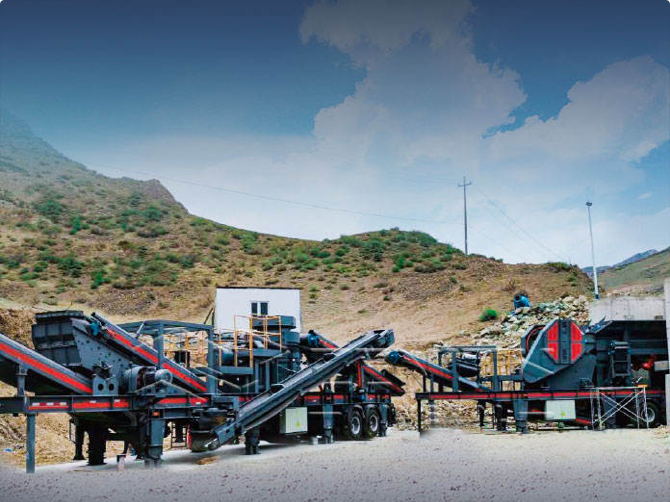
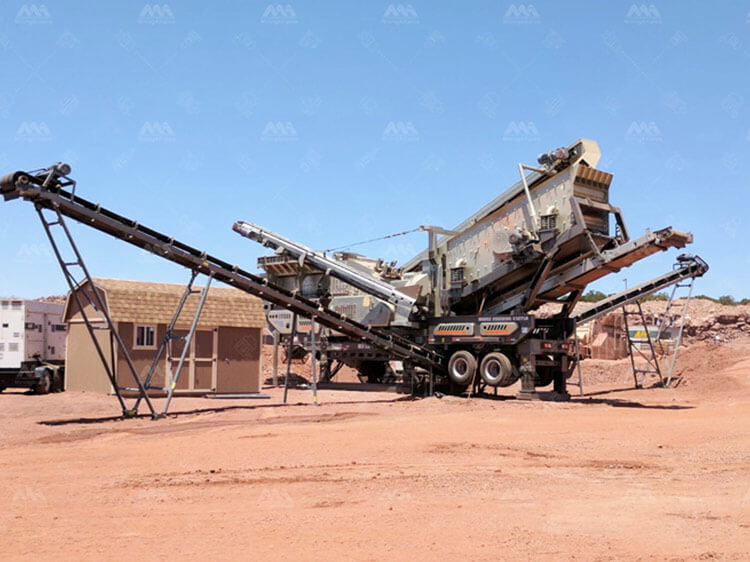
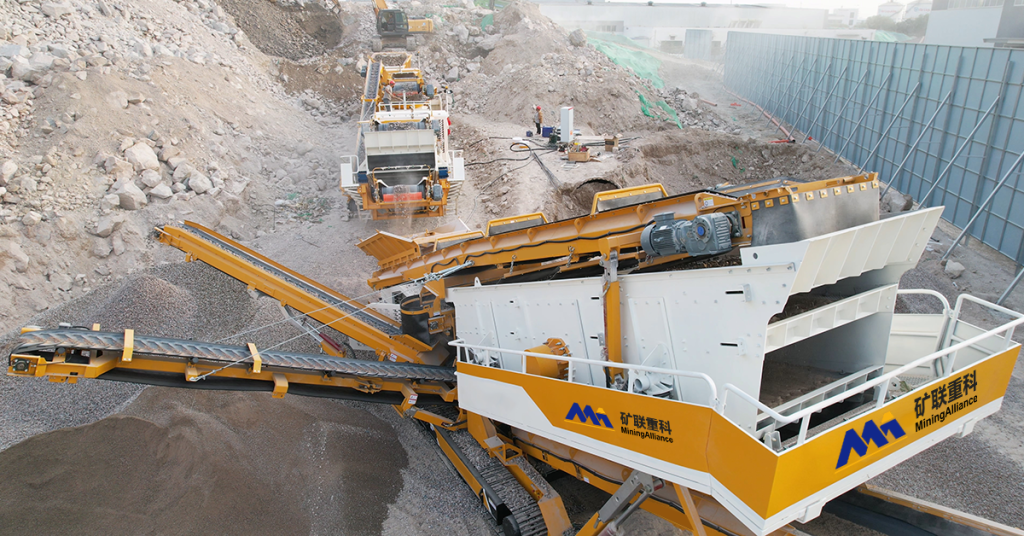
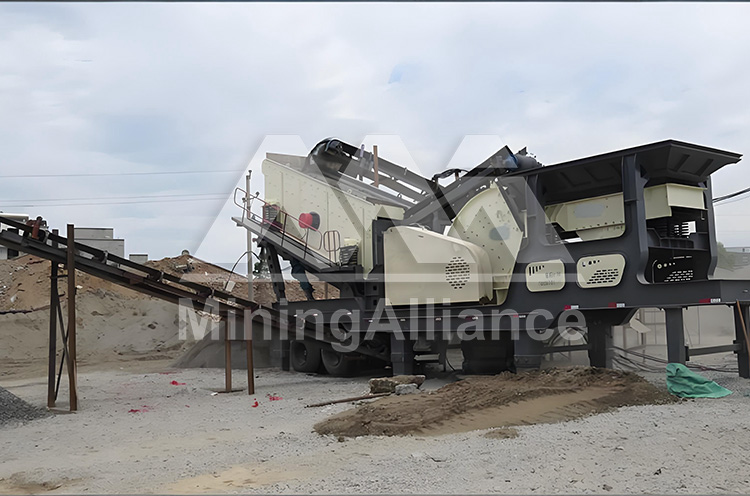
A mobile crusher is a crushing machine that is mounted on a movable platform—either wheels (tire-mounted) or tracks (crawler-mounted)—allowing it to be transported easily between work sites. Unlike traditional stationary crushing plants, which require solid foundations, fixed installations, and significant civil engineering work, mobile crushers are designed for flexibility and rapid deployment.
At its core, a mobile crusher integrates three main functions:
- Feeding system: A hopper or feeder receives raw material such as rock, concrete, or demolition debris.
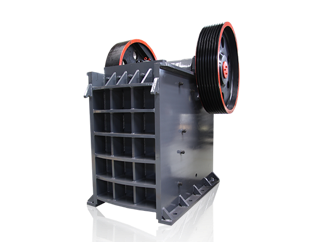
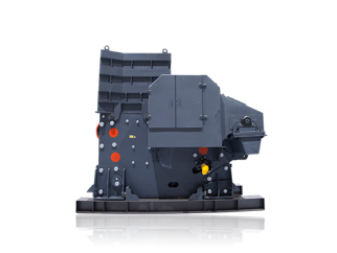
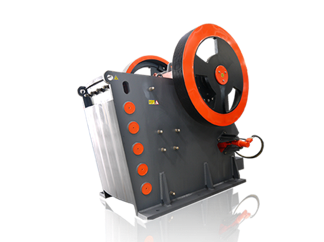
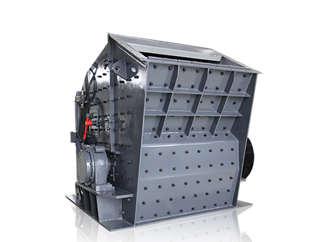
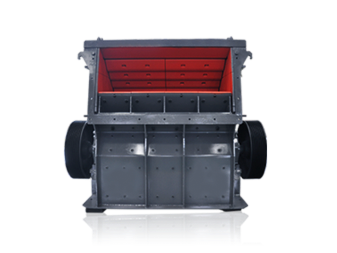
- Crushing unit: This may be a jaw crusher, cone crusher, impact crusher, or vertical shaft impactor (VSI), depending on the application.
- Screening system (optional but common): Many modern mobile plants include vibrating screens that separate crushed material into different size fractions on-site.
These components can be combined into a single compact machine or configured as multi-stage mobile crushing and screening plants.
Why mobility matters
Mobility is the defining advantage of this equipment category. In traditional setups, raw material must be transported to a fixed plant for processing. Mobile crushers reverse this logic: the machine goes to the material.
This brings several key advantages:
- Reduced hauling costs: Transporting raw stone, rubble, or ore is expensive. Mobile crushing reduces the need for long-distance trucking.
- Faster setup and teardown: Mobile units can be operational within hours or days rather than weeks or months.
- Ideal for temporary sites: Road construction, demolition sites, and short-term quarry operations benefit from equipment that can move as the project progresses.
- Flexible deployment: Machines can follow the working face of a quarry or move between scattered project sites.
In short, mobile crushers are designed for agility in industries where location changes frequently or where material sources are dispersed.
2. Typical Small-Scale Use Cases in China
China has become the global hub for mobile crushing technology, driven by its massive internal demand for rapid infrastructure and urban renewal. Small-scale firms in China utilize these machines in three primary scenarios:
Small Stone Quarries and Local Aggregates
In rural provinces, local demand for gravel and sand often doesn't justify a multi-million dollar stationary plant. Small firms use mobile units to service local road builds or housing developments, moving the machine once the local deposit is exhausted.
Construction and Demolition (C&D) Waste Recycling
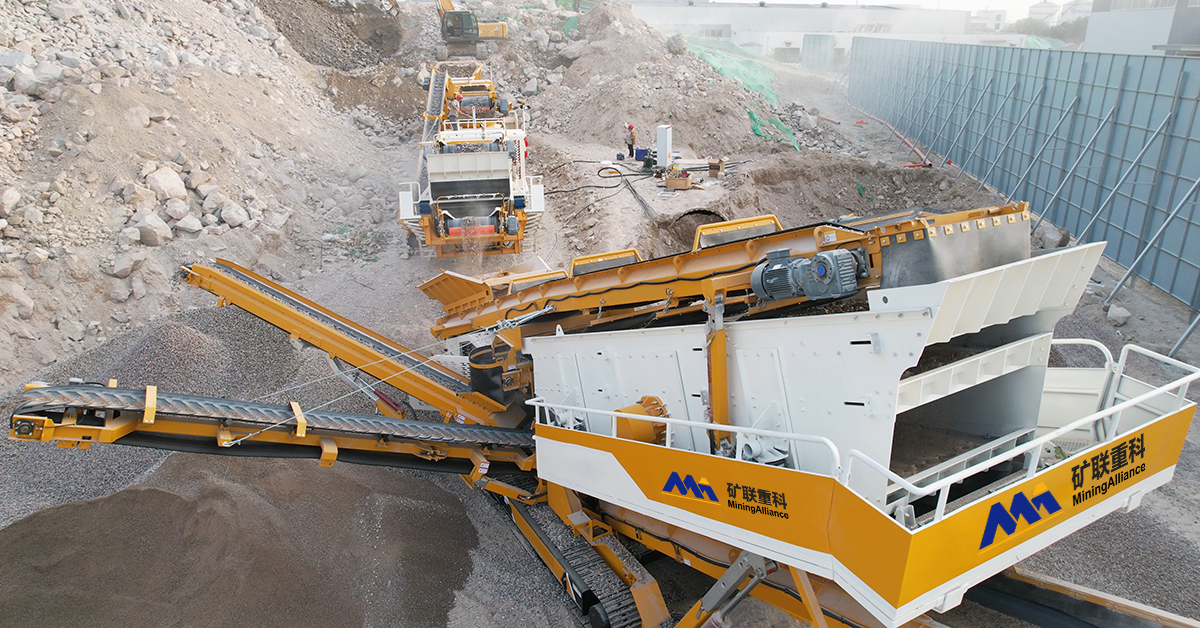
Urbanization in China creates a massive amount of concrete rubble. Small mobile crushers are deployed directly into city centers to process demolition waste. By crushing concrete and brick on-site, companies produce recycled aggregates that can be used immediately for road sub-bases, saving on landfill fees and raw material costs.
Remote Infrastructure Projects
For "Belt and Road" initiatives or domestic mountain road projects, sites are often scattered and difficult to access. Mobile crushers mounted on tracks can navigate steep terrain and begin production within hours of arriving, making them ideal for short-run projects.
3. Pros of Using a Chinese Mobile Crusher for Small Operations
Chinese manufacturers have become major players in the mobile crushing equipment market, particularly for small-scale operations. Their machines offer several advantages that make them appealing to budget-conscious and flexible operators.
Lower upfront cost
Chinese mobile crushers are generally more affordable than equivalent models from Western brands. This lower capital investment reduces financial risk for small businesses and makes it easier to enter the market or expand capacity.
Compact size and easy mobility
Many Chinese mobile crushers are specifically designed for small to medium throughput ranges, typically between 20 and 150 tons per hour (tph). Their compact design allows them to be easily transported between sites, either by towing (tire-mounted) or self-propelled movement (track-mounted).
Faster setup and relocation
Unlike stationary plants that require concrete foundations and extensive installation, mobile crushers can be operational within a short time after arriving on-site. This is particularly valuable for short-term projects or operations that frequently change locations.
Suitable throughput for small-scale work
Small mobile crushers often offer flexible production capacities, commonly ranging from 20 to 300 tph depending on the model and configuration. This makes them well-suited for intermittent operations or projects that do not require continuous high-volume production.
On-site processing and recycling
For construction and demolition applications, mobile crushers enable on-site processing. Materials can be crushed and screened directly where they are generated, reducing transportation costs and improving operational efficiency. This also creates opportunities to reuse materials immediately, increasing profit margins.
4. How to Choose a Chinese Mobile Crusher Manufacturer for Your Small-Scale Operation
Chinese manufacturers (including MiningAlliance):
- More flexible configurations
- Easier customization for material and output
- Better cost-performance ratio for overseas projects
For many contractors, the choice depends more on project scale and budget than brand origin.
MiningAlliance positions itself between large Chinese manufacturers and international brands.
Rather than competing on scale or brand history, it focuses on project-based mobile crushing solutions, especially for tracked mobile crushers, tire mobile crushers, and mini mobile crushers used in small to mid-scale projects.
For 5–300 TPH projects, international brands are not always necessary.
Many buyers choose specialized Chinese suppliers like MiningAlliance, which focus on this capacity range and provide customized tracked, wheeled, or mini mobile crushing solutions with more reasonable investment levels.