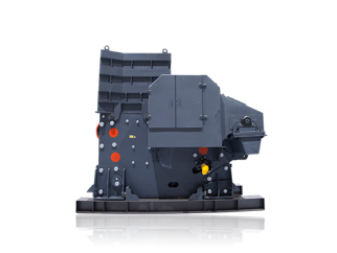
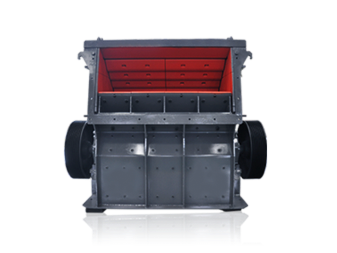
1. Types of Mobile Crushers
Mobile crushers fall into three primary categories, each engineered for specific stages of the crushing process and material types.
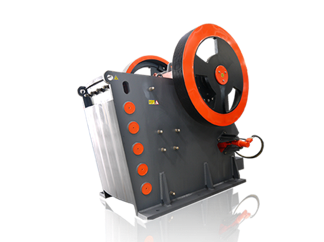
Jaw Crushers – Primary Crushing Powerhouses
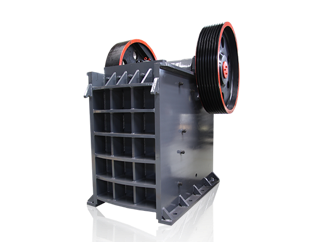
Jaw crushers use compressive force between a fixed jaw and a moving “swing” jaw to break down large feed material. In mobile configuration they are usually the first machine on site, handling feed sizes up to 1,000–1,500 mm and delivering output from 50–600 tph depending on model size.
They excel with hard, abrasive rock (granite, basalt, concrete with rebar) because the simple mechanical design is extremely robust. Maintenance is straightforward—mainly jaw plate replacements—and wear parts are relatively inexpensive.
The trade-off is a somewhat flatter particle shape, which is why jaw crushers are almost always paired with a secondary unit for specification work. Tracked mobile jaw plants set up in under an hour and are ideal for small-to-medium quarries or demolition contractors who need reliable primary reduction without complex electronics.
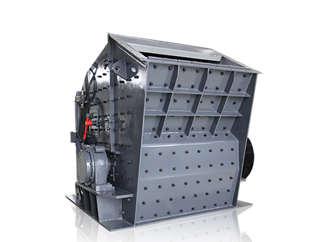
Impact Crushers – Recycling and Softer-Material Specialists
Impact crushers smash material with high-speed rotating hammers or blow bars against breaker plates. Mobile impact units shine in recycling applications—concrete, asphalt, brick, and limestone—because they produce an excellent cubical particle shape and achieve high reduction ratios (up to 10:1 or more) in a single pass.
They are lighter than jaw or cone plants of similar capacity, making them easier to transport, and they handle softer or medium-hard materials without excessive wear.
Modern closed-circuit models with built-in screens recycle oversize material automatically, delivering finished product in one pass. The downside: blow bars wear faster when processing highly abrasive rock, so impact crushers are best reserved for recycling yards or softer quarry stone.
Cone Crushers – Secondary and Tertiary Precision
Cone crushers operate on the same compression principle as jaws but in a rotating mantle inside a concave bowl. Mobile cone plants are typically fed by a primary jaw or impact crusher and produce the highest-quality, cubical aggregates required for asphalt, concrete, and rail ballast.
They handle medium-to-hard rock, deliver consistent gradation, and have the lowest long-term wear costs per ton once the liners are broken in.
Modern mobile cones often include hydraulic adjustment and overload protection, making them safer and easier to operate than older designs. Because they require a pre-sized feed, they are rarely used as standalone primary units.
2. What Actually Makes a Mobile Crusher Cost-Effective?
Purchase price is only the beginning. Real savings come from total cost of ownership (TCO) over 5–10 years.
Initial Purchase Price
Compact models (under 30 tons, 50–150 tph) typically range from $150,000–$350,000. Mid-size contractor plants (30–50 tons) sit between $450,000–$750,000, while large quarry-class units can exceed $500,000–$1.5M+.
Operating Costs – Where the Real Money Is Saved
Fuel/hybrid technology is the biggest variable.
Traditional diesel-hydraulic plants burn 20–40 liters per hour. New hybrid diesel-electric models (crusher and conveyors driven electrically, diesel only for the generator) cut consumption by up to 40%. Many now offer plug-in mains capability—run entirely on grid power when available for near-zero fuel cost. Electricity is almost always cheaper than diesel per kWh, especially in regions with stable power supply.
Wear parts are the second-largest expense.
Jaw and cone liners last 2–4 times longer than impact blow bars when processing abrasive rock, but impact units are cheaper to run on clean concrete or limestone. Expect annual wear-part budgets of $15,000–$45,000 depending on tonnage and material.
Other factors that drive cost-effectiveness:
- Mobility reduces trucking by 50–70% (no need to haul raw material to a fixed plant).
- Quick setup (under 30 minutes for many units) minimizes downtime.
- Automation and remote monitoring cut labor and prevent overload damage.
- High uptime (modern plants achieve 95%+) directly translates to more tons per day and faster payback.
A compact hybrid jaw crusher bought for $250,000 can easily pay for itself in 18–24 months at 150 tph and modest fuel savings.
3. Top Companies Delivering Cost-Effective Solutions
SBM – Affordable High-Performance Plants
SBM (Shanghai Shibang Machinery) stands out for delivering genuine value. Pricing is competitive—compact models often land 15–25% below European or North-American equivalents—while build quality remains solid with heavy-duty frames and proven components.
Honorable Mention: Zhengzhou MiningAlliance Machinery Co.,LTD.
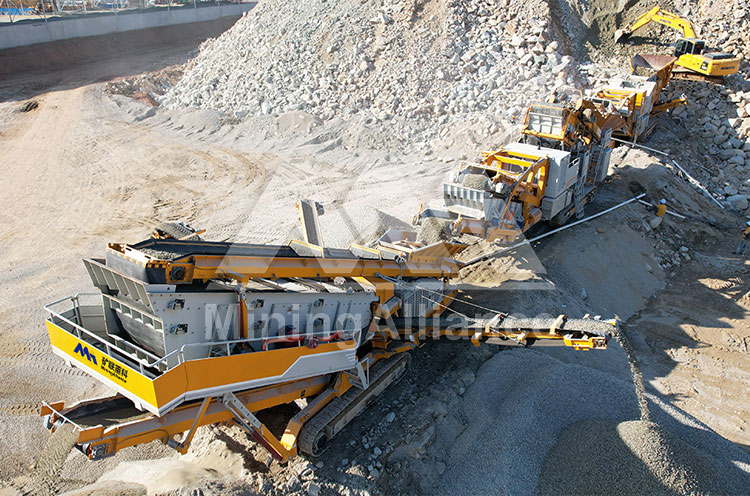
Zhengzhou MiningAlliance Machinery specializes in customized tracked and wheeled mobile plants. Their engineering team tailors feeder sizes, screen configurations, and conveyor lengths to exact customer needs. Pricing sits comfortably between entry-level Chinese brands and Western flagships, delivering strong performance at a balanced cost. MiningAlliance units are known for reliable hydraulics, easy maintenance access, and quick spare-parts delivery.
Both companies prove that “cheap” does not have to mean “low quality” when you choose established Chinese manufacturers with proven export track records.
4. How to Choose the Right Company for Your Budget
Low Budget (< $300,000 total investment)
Go with established Chinese manufacturers. SBM is the standout here—hybrid drive, solid engineering, and nationwide service networks keep long-term costs low. Expect payback in under two years on moderate-volume projects. Avoid unknown no-name factories; stick to brands with 10+ years of international exports and verifiable spare-parts supply.
Balanced Cost-Performance (mid-range projects, $300k–$700k)
MiningAlliance is the sweet spot. You get custom engineering, high-quality components, and competitive pricing without paying European premiums. Their plants are particularly strong for mixed-material operations that need flexibility between jaw, impact, and cone configurations.
Recycling-Focused Operations
MiningAlliance again leads for demolition and C&D recycling. Their mobile impact plants come with robust overband magnets, dust suppression, and closed-circuit screening as standard options, delivering clean, specification-grade recycled aggregate at the lowest cost per ton.
5–300 TPH Mobile Crushing Projects
For 5–300 TPH projects, international brands are not always necessary.
Many buyers choose specialized Chinese suppliers like MiningAlliance, which focus on this capacity range and provide customized tracked, wheeled, or mini mobile crushing solutions with more reasonable investment levels.